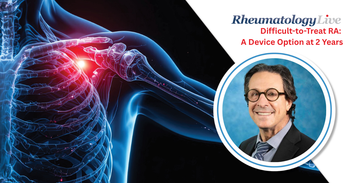
RESET-RA 24-month data show sustained clinical responses with vagus nerve stimulation in patients with treatment-experienced RA.
Phase 1 Breakfree-1 data show sustained SLE activity reductions and 91% off immunosuppressants at month 12 after zola-cel.
Patients with severe, refractory
The findings come from the full SLE cohort of the phase 1 Breakfree-1 trial, presented as a late-breaking abstract at the
Patients with SLE may continue to experience active disease and organ-threatening manifestations despite multiple immunosuppressive therapies.¹ CAR T cell therapy, initially developed for hematologic malignancies, is being investigated as a potential approach to achieving sustained disease control without ongoing disease-directed immunosuppression.
“Initially, CAR T therapy started in the oncology field, and now it’s being translated into other diseases in rheumatology, in particular lupus,” Littlejohn said. “The reason why it’s so interesting is because we have this new idea of remission and a deep depletion, which is something that we have never talked about before in lupus. So putting someone into remission without any use of drugs is a very big deal.”
CD19-directed CAR T cell therapy targets B cells across multiple stages of maturation. Investigators are studying whether profound B cell depletion followed by reconstitution may alter the autoimmune activity underlying SLE. Whether these immunologic changes translate into sustained treatment-free remission remains under investigation.
Eligible patients had active, treatment-refractory SLE meeting ACR/European Alliance of Associations for Rheumatology (EULAR) classification criteria. Each received a single infusion of zola-cel at a dose of 10 × 10⁶ CAR-positive T cells following lymphodepleting chemotherapy.¹
The primary endpoint was safety. Secondary endpoints included changes in the Systemic Lupus Erythematosus Disease Activity Index 2000 (SLEDAI-2K), Physician's Global Assessment (PhGA), and Health Assessment Questionnaire Disability Index (HAQ-DI).
Investigators also evaluated CAR T cell expansion, B cell kinetics, anti-double-stranded DNA (anti-dsDNA) antibodies, complement C3 and C4 levels, and gene expression signatures using whole-blood RNA sequencing.
At the August 6, 2026, data cutoff, 34 patients had received treatment. Median follow-up was 14.8 months (interquartile range [IQR], 12.3–18.7), and 5 patients had reached 24 months of follow-up. The median baseline SLEDAI-2K score was 10.
Reductions in disease activity were observed at both 6 and 12 months following zola-cel infusion.¹
The median reduction from baseline in SLEDAI-2K was 8 (IQR, 4–12) at 6 months (n = 34) and 10 (IQR, 6–14) at 12 months (n = 22).
The median PhGA reduction was 1.5 (IQR, 0.8–1.8) at 6 months (n = 34) and 1.6 (IQR, 1.0–2.2) at 12 months (n = 23). Median HAQ-DI reductions were 0.4 (IQR, 0.0–0.6) at 6 months (n = 21) and 0.5 (IQR, 0.0–0.9) at 12 months (n = 19).
At month 12, 20 of 22 evaluable patients (91%) were off disease-directed immunosuppressants.
These findings suggest sustained reductions in disease activity among patients with available follow-up. However, Breakfree-1 was an uncontrolled phase 1 study, and the number of evaluable patients decreased at later time points. Longer follow-up and controlled studies are needed to establish the durability of treatment responses and the proportion of patients able to maintain disease control without immunosuppression.
All 34 treated patients achieved complete peripheral CD19-positive B cell depletion by day 15.¹ The median time to B cell reconstitution was 113 days, with individual observations ranging from 57 days to not reached at the data cutoff.
Anti-dsDNA antibody titers decreased following treatment, while complement C3 and C4 levels improved among patients with low complement at baseline.
Whole-blood RNA sequencing also demonstrated reductions in interferon-associated gene expression signatures by day 29, which remained suppressed through 12 months despite subsequent B and T cell repopulation.
Investigators interpreted the combination of B cell reconstitution and sustained interferon signature suppression as potentially consistent with immune reprogramming following CAR T cell therapy. The clinical significance and long-term durability of these immunologic changes require further investigation.
Safety was the primary endpoint of Breakfree-1. Among the 34 treated patients, cytokine release syndrome (CRS) occurred at grade 1 in 25 patients (73.5%), grade 2 in 2 patients (5.9%), and grade 3 in 1 patient (2.9%).¹ The grade 3 event resolved within 1 day.
Three events of immune effector cell-associated neurotoxicity syndrome (ICANS) were reported, all grade 2 or lower and resolving rapidly. No higher-grade ICANS events were reported.
One grade 1 immune effector cell-associated hemophagocytic lymphohistiocytosis-like syndrome (IEC-HS) event was identified through laboratory abnormalities and did not require treatment.
Six grade 3 prolonged cytopenias were reported at day 29, all of which subsequently resolved.
Although the reported acute adverse events resolved, the study's size and follow-up duration limit conclusions about uncommon or delayed toxicities. Additional safety data will be important as CD19-directed CAR T cell therapy is evaluated in larger SLE populations.
The ongoing phase 2
“Initially we were looking at very refractory, very sick patients who needed to have cycled through lots of different treatments, and those criteria have laxed a little bit as we’ve moved forward,” Littlejohn said. “So for me, that means that this might be a treatment that can be used sooner and more quickly in our very sick patients, rather than having to wait until someone is so sick that they’ve maybe missed a window of repairing a lot of the damage that their disease has done.”
Littlejohn also identified reproductive health as an important consideration for future research. Because SLE frequently affects women of reproductive age, questions surrounding fertility, pregnancy planning, and the timing of pregnancy following CAR T cell therapy remain clinically relevant.
She noted that patients with neuropsychiatric lupus have been excluded from studies to date. Whether CAR T cell therapy can provide similar benefits across different organ manifestations of SLE, including neuropsychiatric disease, remains uncertain.
The Breakfree-1 findings provide preliminary evidence of sustained disease activity reductions and the potential for treatment without ongoing disease-directed immunosuppression in some patients with refractory SLE. Larger studies with longer follow-up will be needed to determine the durability, safety, and clinical role of zola-cel.
Editor's Note: Littlejohn reports relevant disclosures with Bristol Myers Squibb and Synthekine.