News

Treatment Failing Majority of RA Patients

More than half of rheumatoid arthritis patients had persistent moderate-to-high disease activity after six months of treatment with a conventional synthetic disease-modifying anti-rheumatic drug (csDMARD), and less than a third had their therapy escalated, indicating that there is considerable need for a treat-to-target approach to care for these patients, say researchers recently writing in Clinical Rheumatology.


Awkward but Important Patient Conversations: Problematic Drug and Alcohol Use

This column will feature a series of focused overviews with practical suggestions for managing the manifold tricky needs of your patient population. This series started with a primer for addressing the sexual health questions of patients-paired with a healthy dose of required self-reflection (“Teach them to fish: Addressing the sexual health needs of patients and practice culture”). The series will continue with this dive into problematic substance use and next to coverage of other important but thorny issues including personality disorders, patient safety in the home (exposure to violence, abuse, or self-harm), cognitive impairment vis-à-vis medical decision-making, and the de-escalation of agitated, angry patients. There are other dozens of other difficult conversations, so please get in touch with suggestions.

Senior Rheumatoid Arthritis Patients May Be Missing Out on Treatments

Even though senior patients with rheumatoid arthritis receive biologic therapies less often than patients who develop the condition early in life, a Japanese study presented this month at the ACR annual meeting, shows that patients 60 years and older can benefit from therapy just as much as younger patients.

Preliminary Study Shows Promise in Immunotherapy for Rheumatoid Arthritis

Researchers are exploring the possibility of using immune checkpoint inhibitors in rheumatoid arthritis patients. A small study presented at the American College of Rheumatology (ACR) annual meeting earlier this month shows that rheumatoid arthritis (RA) patients who were treated with immunotherapy, responded just as well as a comparable patient population with only 12 of 22 patients experiencing flares.

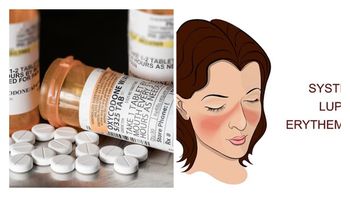
High Rates of Inappropriate Opioid Use Found in SLE

A large proportion of patients with systemic lupus erythematosus (SLE) have been inappropriately prescribed opioids, researchers reported recently in the Morbidity and Mortality Weekly Report.

Ninfetanib Improves and Stabilizes Lung Function in Systemic Sclerosis

Patients who have systemic sclerosis-associated interstitial lung disease and received nintedanib were more likely to have improved lung function than patients who received a placebo, according to a new study. Not only did nintedanib improve forced vital capacity, but patients who received the drug were less likely to experience declining clinical status and more likely to see their conditions stabilize.

Anifrolumab Shows Efficiency in Systemic Lupus

ACR Annual Meeting:  In patients with moderate to severe systemic lupus erythematosus, anifrolumab (AstraZeneca) was superior to placebo for overall disease activity, skin disease and oral corticosteroid tapering, among other efficacy endpoints, according to a study presented at the annual meeting of the American College of Rheumatology in Atlanta on November 12.

Researchers Try to Reverse the Aging Process for Arthritic Joints

ACR Annual Meeting:  Single intra-articular doses of UBX0101 of up to 4 mg were well-tolerated by patients with painful knee osteoarthritis, according to a study presented at the annual meeting of the American College of Rheumatology in Atlanta on November 12. The treatment is in development, but if it pans out, it may reduce the effects aging on arthitic joints.

Emapalumab Shows Promise in Macrophage Activation Syndrome

ACR Annual Meeting:  In a small study, patients with macrophage activation syndrome (MAS) receiving emapalumab (Gamifant, Sobi) achieved complete response, according to data presented at the annual meeting of the American College of Rheumatology in Atlanta on November 12.