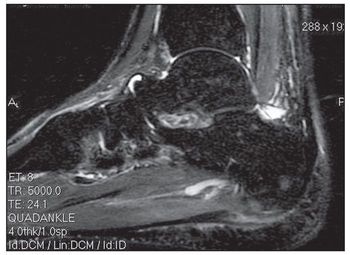
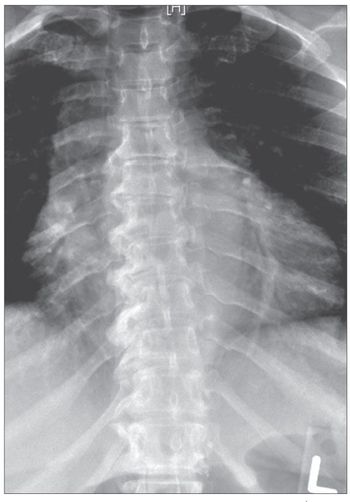
DISH, a radiographic finding characterized by abnormal calcification and ossification in the axial skeleton and in ligaments and entheses,1 most often affects the thoracic spine. Of note, the findings almost always are more prominent on the right side (the left side may be spared because of aortic pulsations). The enthesopathy, also called“whiskering,” can affect the pelvic brim, ischial tuberosities, greater trochanters, and other features that have ligamentous attachments.2 Diagnosis often is made after an incidental finding in an asymptomatic patient.