

Results demonstrated IHL-675A was well-tolerated, with no concerning adverse events or serious adverse events reported.
Results demonstrated IHL-675A was well-tolerated, with no concerning adverse events or serious adverse events reported.
By establishing a link between endogenous retroviruses, inflammation, and autoreactive T cells in lupus, research conducted by Akiko Iwasaki, PhD, has the potential to pave the way for new targeted therapies for this complex condition.

Lora Black, PhD, sheds light on the importance of patient-centered education and comprehensive care in fibromyalgia.
Angus Worthing, MD, discusses the recent developments in rheumatology and his predictions for the future of treatment moving into 2024 and beyond.

Wesley Mizutani, MD, discusses California's SB 496 legislation, which addresses the crucial role of biomarkers in guiding optimal drug selection to improve overall healthcare outcomes.

Roger A Levy, MD, PhD, discusses the transformative impact of the KDIGO guidelines, which recommend early initiation of belimumab for lupus nephritis.

Roger A Levy, MD, PhD, discusses the recent guideline updates regarding the treatment and management of lupus nephritis.
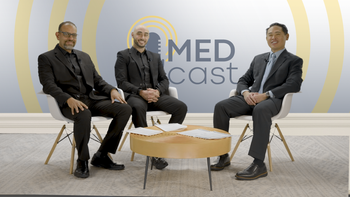
In this discussion, experts focus on emerging treatment options for gout and share tips for monitoring and managing gout in patients with comorbid conditions.

Stacie Bell, PhD, emphasizes the importance of collaborative or multidisciplinary care in patients with SLE.
Stacie Bell, PhD, highlights the lasting effects of childhood adversities in patients with pediatric lupus.
Stacie Bell, PhD, discusses the disagreement between adolescents and parents regarding how lupus impacts daily life.

Philip J. Mease, MD, highlights the potential of blood biomarkers to assist with diagnosing fibromyalgia, as well as other imaging modalities.
Philip J. Mease, MD, discusses treatment selection in fibromyalgia, highlighting combination therapy as well as the importance of a holistic approach to care.
Philip J. Mease, MD, discusses treatment selection in fibromyalgia, highlighting combination therapy as well as the importance of a holistic approach to care.
An expert rheumatologist reviews the efficacy and safety of the 3 FDA-approved therapies for treating fibromyalgia—pregabalin, duloxetine, and milnacipran.

Expert rheumatologists discuss current treatment options for lupus nephritis and emerging therapies with newer mechanisms of action.
Peter C Taylor, PhD, discusses the efficacy and safety of nipocalimab in patients with active rheumatoid arthritis.
Philip J. Mease, MD, comments on the importance of education about fibromyalgia, especially regarding the stigma and the psychological impact of the disease.
Philip J. Mease, MD, provides an overview of fibromyalgia as a primary disorder of central pain processing and modulation.

Dr Daniel J. Clauw shares clinical pearls for the treatment of patients with fibromyalgia and comments on future developments in the pipeline for disease management.
Daniel J. Clauw, MD, shares his approach to selecting FDA approved therapeutic agents for fibromyalgia treatment and his clinical treatment strategy when first-line pharmacological therapy fails.
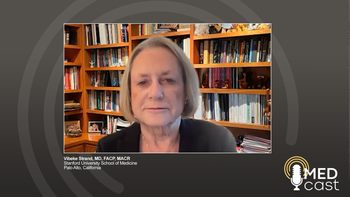
Expert rheumatologists discuss precision medicine in rheumatoid arthritis. In particular, they discuss available data and the value of various tools in guiding treatment selection in routine clinical practice.
Dr Daniel J. Clauw provides an overview of pharmacologic and nonpharmacologic therapeutic approaches for the management of fibromyalgia and comments on challenges and unmet needs for patients.
Daniel J. Clauw, MD, describes the role the brain and CNS play in controlling the setting of nociplastic pain in patients with fibromyalgia and highlights increased patient sensitivity to sensory stimuli.

During this interview segment, Dr. Deodhar described his presentation at the ACR 2023 convergence on longitudinal data regarding bimekizumab for patients with this condition.

In this discussion with Dr. Mease at ACR 2023, he covers findings on an assessment tool known as the PsA-5Ts for patients with psoriatic arthritis.
This interview segment with Dr. Mease featured a discussion about data presented at ACR 2023 on guselkumab and patients with psoriatic arthritis.

After a 12-week gap, 5% of patients returned to pegloticase and responded well.

This segment of Dr. Kivitz’s interview at ACR 2023 featured a discussion about future research on TAK-279 as well as general outlook on the field for psoriatic arthritis.