
Opinion|Videos|September 26, 2024
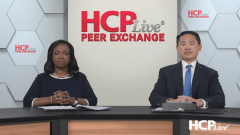
Closing Remarks
Panelists discuss how their approaches to treating patients with rheumatoid arthritis focus on personalized strategies that prioritize achieving remission while carefully monitoring safety and efficacy outcomes.
Advertisement
Episodes in this series
Video content above is prompted by the following:
Can each of you provide closing remarks on how you treat your own patients to achieve remission?
Advertisement
Related to this article
Afimetoran achieved SRI-4 response rates of 64.1% to 67.8% vs 34.4% with placebo in a phase 2 SLE trial.
The 200-mg dose improved ACR20 response vs placebo at week 16 in biologic-naïve patients, while the 400-mg dose added no benefit.
An international IgG4ward! Foundation panel issued 28 treatment statements for IgG4-related diseases, with consensus reached on 22.
In 33 patients with myositis-associated ILD from FIBRONEER-ILD, nerandomilast numerically slowed FVC decline and lowered progression risk.
RESET-RA 24-month data show sustained clinical responses with vagus nerve stimulation in patients with treatment-experienced RA.
In a matched claims analysis, 94% of patients with PMR initiating sarilumab discontinued glucocorticoids by 12 months vs 78% initiating methotrexate.
Patients with relapsing GCA who stopped upadacitinib after year 1 flared sooner and needed far more glucocorticoids than new-onset patients.
In year 2 of SELECT-GCA, 6.0% of patients continuing upadacitinib flared vs 55.9% switched to placebo.
Advertisement
Advertisement
Trending on Rheumatology Live
1
Nipocalimab, Telitacicept, and the Sjögren’s Disease Pipeline
2
Dazodalibep Eases Sjögren’s Dryness via CD40L Blockade: Ghaith Noaiseh, MD
3
Dazodalibep Lowers Sjögren’s Disease Activity: Ghaith Noaiseh, MD
4
INDIGO: Obexelimab Sustains IgG4-RD Flare Control, With John Stone, MD, MPH
5